 التكنولوجيا وأخبارها بوابة مصر لأخبار تكنولوجيا المعلومات والإتصالات وفي أفريقيا كما تعتبر مصدر رئيسي للمعلومات حول تكنولوجيا المعلومات والاتصالات والفرص الاستثمارية المرتبطة بالاقتصاد الرقمي في المنطقة بالكامل



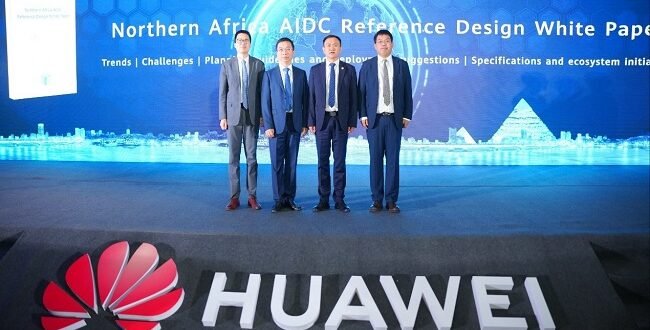
During the Huawei Intelligent Africa Congress 2026, held in Cairo, Huawei hosted the AI Data Center Innovation Summit under the theme “Advancing Industrial All Intelligence for Africa.”
The summit brought together industry leaders, customers, and partners from across sectors to explore emerging business opportunities, showcase cutting-edge solutions, and highlight successful digital transformation journeys. A major highlight of the event was the launch of the Northern Africa AIDC Reference Design White Paper, offering a comprehensive framework for building next-generation AI data centers across the continent.
AI Moves to the Core of Production
In his keynote, Benjamin Hou, CEO of Huawei Egypt, emphasized that artificial intelligence has evolved far beyond a support function. He noted that AI is now deeply embedded in core production processes, with intelligent agents capable of autonomously planning, executing, and optimizing complex operations.
Hou stressed that these advancements are reshaping economies, industries, and daily life. He also highlighted Egypt’s rapid progress in implementing its Second National AI Strategy, aiming to transition from a technology consumer to a producer of AI-driven solutions. Huawei reaffirmed its commitment to supporting this transformation through its integrated capabilities in connectivity, computing, and digital power, while promoting open collaboration and knowledge transfer across Africa.
Egypt’s New Capital as a Smart City Model for Africa
Ahmed Fahmy, General Manager of the Administrative Capital for Urban Development, outlined the broader vision behind Egypt’s New Administrative Capital. He explained that the project goes beyond building a modern city, aiming instead to create a scalable smart city model for the entire African continent.
The city has already established a robust fiber-optic infrastructure, serving as its digital backbone. Egypt is also opening its technology platforms to African enterprises, startups, and manufacturers to test and deploy smart solutions in sectors such as logistics, manufacturing, and energy. Fahmy called for stronger collaboration among stakeholders to transform the capital into a “Living Lab” for innovation and a showcase of Africa’s digital future.
SuperPoD Architecture Accelerates AI Adoption
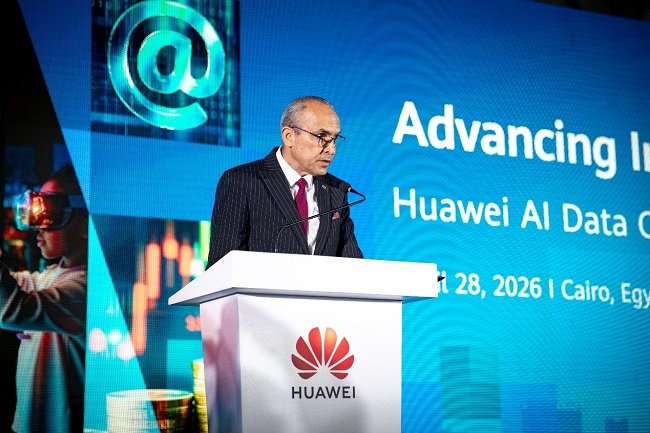
Tony Wu, Vice President of Huawei Computing Marketing & Solution Sales, highlighted the rapid expansion of AI applications, noting that infrastructure and models are now central to national digital development.
He introduced Huawei’s SuperPoD architecture, designed to deliver a unified computing backbone that supports AI processors, enterprise data centers, and hyperscale facilities. Huawei is also advancing open-source software initiatives to empower developers and foster innovation. Through collaboration with more than 20 partners, the company has launched ready-to-deploy solutions tailored to industries such as government, finance, and education, creating tangible value while accelerating Africa’s intelligent transformation.
Data Centers Become Strategic Value Hubs
Erich Hu, Director of Data Center Marketing and Solutions at Huawei, explained that data centers are evolving from cost centers into strategic value hubs in the intelligent era.
With the rise of agentic AI, the demand for computational resources—particularly tokens—has surged dramatically. Huawei’s AI data center solutions are built on five core capabilities: SuperPoD, compute-network synergy, compute-storage synergy, compute-cloud synergy, and compute-management synergy. These innovations enable flexible deployment, support both air and liquid cooling systems, and allow enterprises to optimize infrastructure based on their operational needs.
Cloud Computing as the Backbone of the Intelligent World
Galal Roshdy, CTO of Huawei Egypt Hybrid Cloud, drew a parallel between today’s cloud infrastructure and the role of electricity in the second industrial revolution.
He noted that Huawei Cloud delivers a comprehensive AI ecosystem, including agentic AI applications, industry-specific large language models (LLMs), and advanced infrastructure such as Model as a Service (MaaS), enabling faster and more efficient inference. The platform supports over 500 AI applications across more than 30 industries. Huawei Cloud’s Egypt node also provides capabilities in cybersecurity compliance, big data, and cloud databases, while actively expanding fintech partnerships in the local market.
Future-Ready AI Data Centers: Speed, Efficiency, and Sustainability
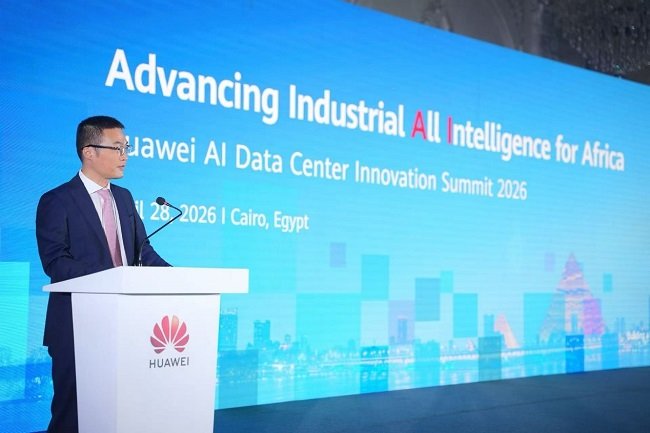
Cui Hong, Director of Huawei Data Center Integration Solutions, stated that AI inference workloads are expected to surpass training workloads by 2026, requiring forward-looking infrastructure planning.
Huawei addresses this need through three core principles: Infra Ready, Operation Ready, and Performance Ready, ensuring efficient deployment of AI resources. AI-powered tools can generate building information models (BIM) and material lists within a single day, while liquid cooling diagnostic agents shift maintenance from reactive to preventive. Semi-prefabricated construction methods reduce time-to-market to under 10 months and cut energy consumption by over 12%. To date, Huawei has delivered more than 1,000 data centers globally, including multiple projects across Africa.
A Comprehensive Blueprint for Africa’s AI Infrastructure
The Northern Africa AIDC Reference Design White Paper provides a structured approach to designing AI data centers, addressing critical aspects such as heat dissipation, power supply, building architecture, and network cabling.
It also introduces flexible delivery models aimed at enhancing construction efficiency and ensuring quality, enabling rapid scalability across the continent. As the wave of intelligent transformation gains momentum, Africa is well-positioned to embrace a digitally driven future powered by innovation and collaboration.
Sign up for our mailing list to receive the latest news.